
Acoustic, Digital, or Hybrid: Which Type of Piano Is Right for You?
Choosing the right piano has never been more exciting — or more personal. Whether you’re looking for timeless tradition, modern convenience, or a blend of both, it’s never been easier to find an instrument that fits your needs, your lifestyle, and your dreams. From the rich sound and craftsmanship of an acoustic grand to the smart flexibility of modern digital and hybrid pianos, there’s a perfect match for every lifestyle, space, and budget.
Most people begin by comparing acoustic and digital pianos, since those two categories represent very different playing experiences. Hybrid pianos sit between the two, blending traditional craftsmanship with modern digital technology. Below, we’ll first compare acoustic and digital pianos side by side, then explore where hybrid pianos fit in — and who they’re best suited for.
In this guide, we’ll break down the three main types of pianos — acoustic, digital, and hybrid — and help you explore which may fit your musical goals best. If you’re looking for quick answers to common questions, be sure to scroll down to our Piano Buying FAQs at the end.

Acoustic Pianos: Classic Craftsmanship, Authentic Sound
What is an acoustic piano?
Acoustic pianos create sound naturally, using felt hammers that strike strings and vibrate through a wooden soundboard. Well made, and well-designed acoustic pianos offer unmatched dynamic range, rich tone, and the tactile feedback serious players love.
What to look for in an acoustic piano
Today’s acoustic pianos offer more variety, beauty, and craftsmanship than ever before. Pianos like Bösendorfer, Schimmel, and Estonia represent timeless, European artistry, and Yamaha brings a full range of acoustic excellence, from advanced designs to meticulously handcrafted heirloom models. Whether you’re seeking a compact upright or a concert grand, the choices are as inspiring as the music they create.
Who should choose an acoustic piano
Quality acoustic pianos offer rich, resonant tone and a traditional playing experience that appeals to serious musicians, aspiring students, and families who value craftsmanship and sound. Here are a few scenarios where a well-made acoustic piano may be the perfect fit:
- Homes where sound quality, visual appeal, and long-term value are important
- Serious and aspiring students developing proper touch, technique, and musical expression
- Players seeking the ultimate in dynamic range, nuance, and acoustic depth

Digital Pianos: Advanced Technology, Accessible Performance
What is a digital piano?
Digital pianos recreate the piano experience using weighted keys and high-quality sampled sounds. They don’t have strings or a soundboard and never require tuning, making them a practical, space-saving, and affordable option for many players. But quality can vary widely between models, so it’s important to compare touch, tone, and features to find the right fit for your needs.
Why choose a digital piano?
Digital pianos are a smart choice—not just because they’re budget-friendly, but because they offer real advantages for a wide range of players. With quiet headphone practice, space-saving design, and expressive touch, they’re ideal for beginners, students, and even experienced musicians looking for flexibility.
Yamaha leads the way with its Clavinova line (CLP, CSP, and CVP models), trusted by educators, families, and professionals for their realistic touch and high-quality sound. Whether you’re just starting out or looking for a versatile alternative to an acoustic, Clavinova delivers performance, convenience, and long-term value.
These are some of the best digital pianos for beginners, and they’re ideal for students who want a serious instrument without investing in an acoustic right away.
Who might choose a digital piano?
As you’d suspect, digital pianos are ideal for students who want a serious instrument without investing in an acoustic right away. But they’re also great for players who want versatility to explore sounds, rhythms, and recording capabilities. Digital pianos are great for:
- Players of all levels seeking a reliable and versatile home or alternative instrument
- Families who need quiet headphone practice options
- Homes with limited space or shared living areas
- Advancing students and serious players with specific practice needs
- Schools and institutions, or anyone seeking a quality, low-maintenance alternative to an acoustic piano

Comparing Acoustic and Digital Pianos
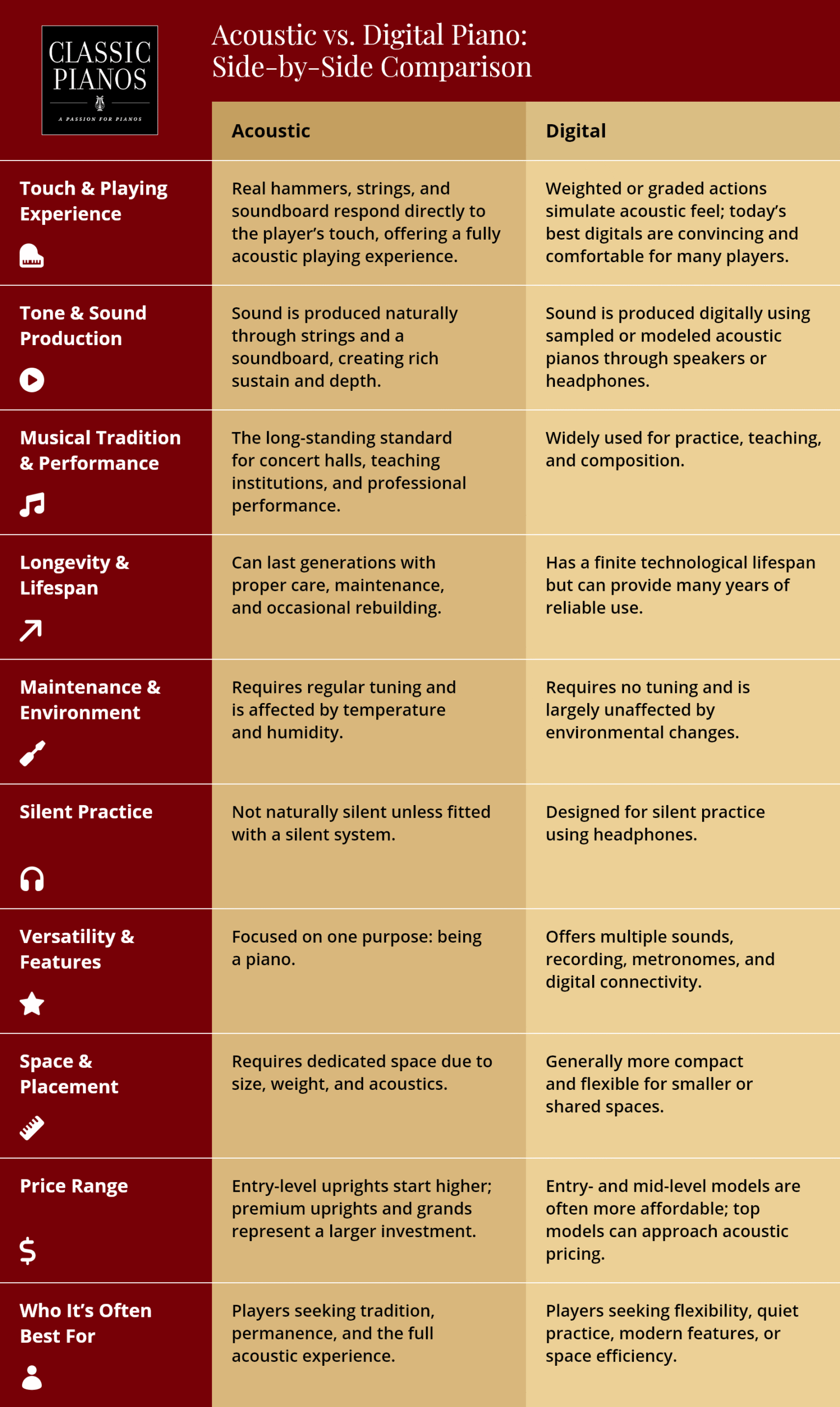
Acoustic and digital pianos serve very different purposes, even though they share the same musical goal. Understanding how they differ — in how they produce sound, respond to touch, and fit into a player’s life — can help clarify which option will best fit your needs
Touch & Playing Experience
An acoustic piano responds entirely through physical interaction: real keys activate hammers that strike strings, with the sound shaped by a wooden soundboard. Many players describe this as a deeply expressive, organic experience that rewards nuance and develops technique over time.
Digital pianos use weighted or graded key actions designed to replicate that feel. While the experience isn’t identical, today’s best digital actions are impressively convincing and satisfying for many pianists, especially for practice, learning, and everyday use.
Tone & Sound
Acoustic pianos produce sound naturally through strings and a soundboard, offering depth, sustain, and complexity that fill a room without amplification. No two acoustic pianos sound exactly alike, and subtle variations are part of their character.
Digital pianos produce sound electronically, using high-quality samples or modeled recreations of acoustic instruments, and play them through speakers or headphones. Volume and tonal character can be adjusted easily, which makes digital instruments highly adaptable to different spaces and situations.
Musical Tradition & Longevity
For centuries, acoustic pianos have been the standard for concert halls, teaching institutions, and professional performance. With proper care, a well-made acoustic piano can last for generations and remain musically relevant for decades.
Digital pianos reflect rapid advances in technology. While they don’t share the same lifespan as an acoustic instrument, quality digital pianos can provide many years of reliable use and continue to improve as manufacturers refine tone, touch, and features.
Why Digital Pianos Exist
If acoustic pianos set the musical benchmark, digital pianos exist to solve real-world challenges. Silent practice with headphones, reduced maintenance, flexible placement, and a wide range of built-in features make digital pianos an appealing choice for many players — particularly those living in shared spaces, apartments, or homes where volume control matters.
For many people, the decision isn’t about which option is “better” in absolute terms. It’s about which instrument best supports their musical goals, lifestyle, and environment right now.
Acoustic vs. Digital Piano: Side-by-Side Comparison

Where Hybrid Pianos Fit In: Real Feel Meets Smart Features
What is a hybrid piano?
Hybrid pianos are real acoustic or acoustic-style pianos enhanced with powerful digital technology — offering real piano feel with the added benefits of silent practice, playback, recording, and more.
Top Yamaha hybrid options
Again, one brand name dominates this category — Yamaha, with a full range of hybrid technologies. Here’s a quick overview of its offering:
- AvantGrand: Acoustic key action with digital sound in a compact design
- Silent Piano: Real acoustic pianos with a silent mode and headphone use
- TransAcoustic: Uses the real soundboard as a speaker for digital tones
- Disklavier: Acoustic player pianos with recording, streaming, and auto-performance features
Who should choose a hybrid piano
Hybrid pianos are ideal for musicians and households who want the touch of a traditional piano combined with smart features for flexibility and convenience. They are especially useful when quiet practice, recording, or high-tech performance capabilities are a priority. If you’re considering an instrument that bridges the best of acoustic and digital technologies, here are some situations where a hybrid piano may be the right choice:
- Serious musicians who want flexibility
- Households with varied practice needs
- Schools, performance venues, and teaching studios
Piano Buying FAQs: Acoustic, Digital & Hybrid Questions Answered
What’s the difference between an acoustic and a digital piano?
Quality acoustic pianos produce sound naturally through hammers striking strings, creating a rich, resonant tone and traditional feel. Digital pianos, on the other hand, recreate the sound electronically using high-quality sampled audio and weighted keys. While acoustic models offer unmatched tonal depth and expressive response, digital pianos can also sound and feel great, are more affordable, easier to move, and require little to no maintenance.
Is a digital piano good for beginners?
Digital pianos, like Yamaha’s Clavinova line, can be an excellent starting point for beginners — they offer weighted keys, realistic sound, and headphone compatibility, all at a more accessible price. For growing pianists and aspiring students, however, it’s important to keep an acoustic piano in sight for the future. As touch sensitivity, dynamic control, and musical expression develop, transitioning to an acoustic instrument becomes a meaningful next step.
What’s the best type of piano to choose?
There’s no single right answer—it depends on your space, goals, experience level, and lifestyle. Acoustic, digital, and hybrid pianos each offer unique advantages. Digital and hybrid models are ideal for those who need volume control, headphone practice, or built-in learning tools. Acoustic pianos offer unmatched tonal richness and a traditional feel that many players aspire to. The best piano is the one that fits your life, supports your musical goals, and inspires you to keep playing
Do hybrid pianos require tuning?
It depends on the model. Fully acoustic hybrid pianos with strings (like Yamaha Silent or TransAcoustic) still need occasional tuning. Fully digital hybrids, like the Yamaha AvantGrand, do not.
Do digital pianos feel like real pianos?
High-end digital pianos like Yamaha’s Clavinova series are designed to closely replicate the touch and responsiveness of an acoustic piano. While they don’t have strings, they feature graded hammer actions and realistic sound samples that feel and sound remarkably authentic.
What’s the best piano for families with young children?
Digital and hybrid pianos are great for families. Models with headphone support, volume control, and recording features make it easy to practice at any time without disturbing others. Some models also include interactive learning tools.
Find the Right Piano for Your Home, Family, or Stage
There’s no single “best” piano — only the one that’s best for you. Whether you’re drawn to the timeless resonance of an acoustic grand, the space-saving convenience of a digital piano, or the unmatched flexibility of a hybrid, today’s piano market has something for everyone.
Why Classic Pianos Seattle Is the Trusted Choice for Local Musicians
Family-owned, Classic Pianos has served the Seattle music community with expert guidance, top-tier brands, and unmatched service.
We invite you to visit our Bellevue showroom or to call 425-462-1888 to speak with a piano expert! Our local team is ready to help you find the perfect piano for your home, school, or performance space.